
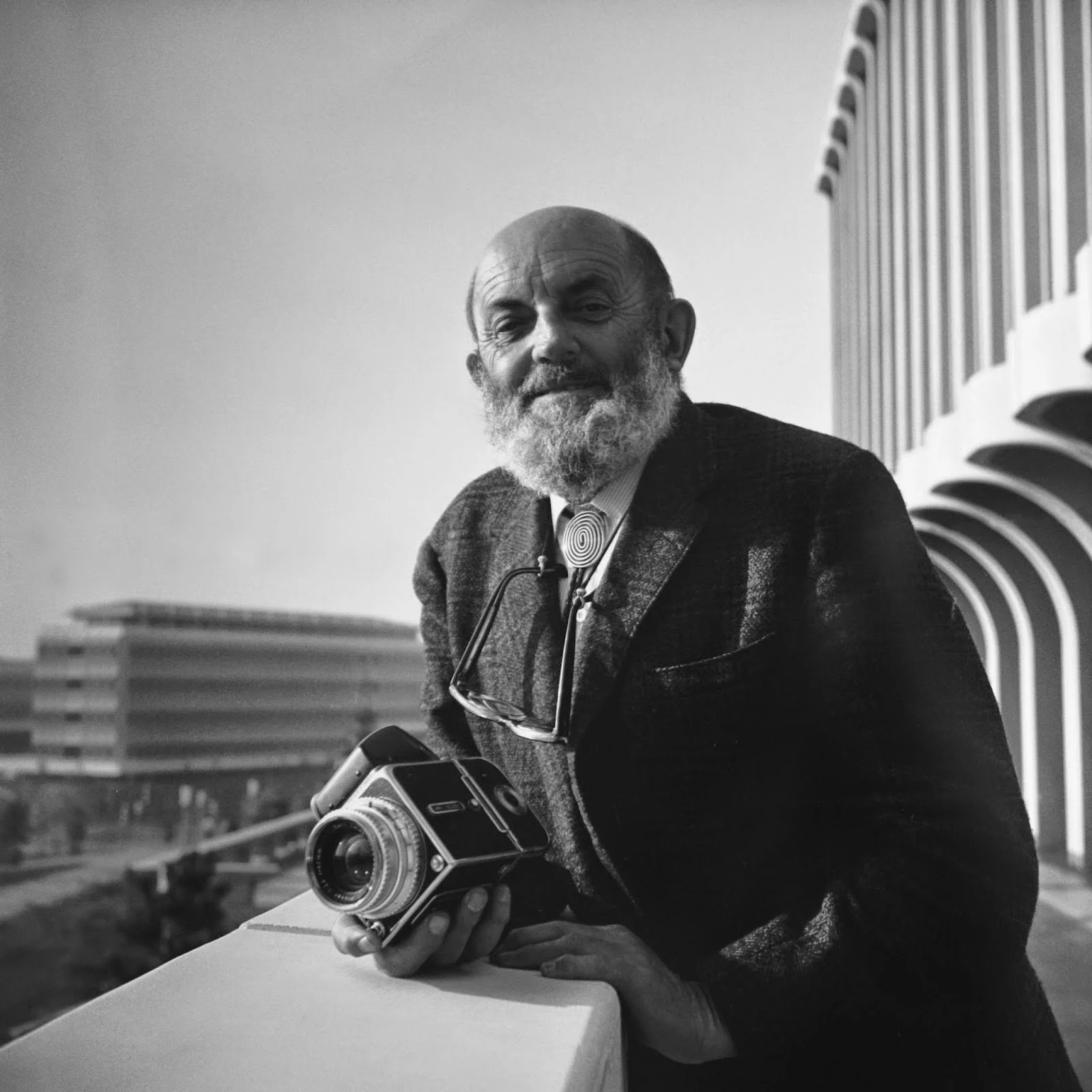
The history of photography is one that continues to surprise the further research I do. After covering the true induction of the art form, reviewing the latter inventions in history is incredibly humbling. Ansel Adams is one pioneer that absolutely deserves coverage of his contributions and hard work. A man with a storied history, wholly distinct and unique in his actions, Adams has lived a life that few could ever dream of living.
Ansel Easton Adams was born in San Francisco, California on February 20th, 1902, the only child of Charles Hitchcock Adams and Olive Bray, named after his uncle (Turnage, 2023). Both his paternal and maternal side of the family had moved from the East Coast of the United States, specifically from New England and Baltimore, eventually finding financial success through lumber and transport. Born to a wealthy family, Adams was raised in a house built on the sand dunes of the Golden Gate (Turnage, 2023). At four years old, Adams was witness to the tragic fires that spawned from the earthquakes in 1906 (Szarkowski, 2024). Although unharmed by the fires or the initial quake, an aftershock caused Adams to slam into a garden wall, breaking his nose, an injury he would carry for the rest of his life (Turnage, 2024) (Biography, 2021). In 1907, the Adams family fortune evaporated during a financial panic, leaving their family in ruins (Turnage, 2023).
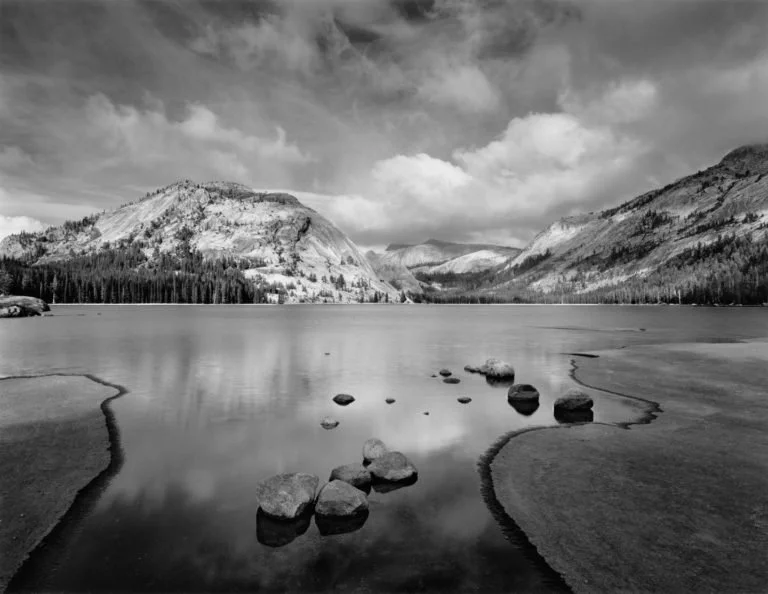
By 12 years old, Adams had proven himself to be an autodidact, someone who has the ability to teach themselves skills without the need for a teacher (Szarkowski, 2024). He became a serious and ambitious musician who was considered by the musicologist and composer Henry Cowell and other qualified judges to be a highly gifted pianist (Szarkowski, 2024). At 16, Adams received his first camera, quickly becoming an impressive and talented photographer (Szarkowski, 2024). He began experimenting with the art form, quickly learning darkroom techniques, attending camera club meetings, and visited several exhibits to discover all he could about the art form (Biography, 2021). In 1919, Adams acquired a position as the custodian of the Sierra Club’s lodge in Yosemite National Park (Szarkowski, 2024) (Turnage, 2023). Throughout his time at the lodge, Adams captured numerous images of the beautiful forestry and landscape, hiking and exploring while capturing everything with the Kodak No. 1 Box Brownie that his parents had gifted to him (Turnage, 2024). In 1924, Adams captured his photographs that began his career as a photographer, which led to him publishing more of his images and writings (Smithsonian, 2024).
In 1926, Albert Bender, an art collector and owner of a small insurance agency in San Francisco, encouraged this idealism by financing Adams's early aesthetic work (Barr, 2000). In 1928, at the age of 26, Adams married Virginia Rose Best, whom he had met in Yosemite during his tenure. The same year, he had his first one man exhibition at the club’s San Francisco headquarters, a result of Bender’s generosity (Turnage, 2023) (Barr, 2000). This exhibit led to Adams meeting photographer Paul Strand and was shown the negatives that Strand was then making in New Mexico in 1930 (Szarkowski, 2024) (Barr, 2000). In 1930 he met the American photographer Paul Strand and was shown the negatives that Strand was then making in New Mexico, becoming known as the artist and defender of Yosemite (Turnage, 2024). In 1933, Adams and his wife welcomed their first child to the world in Michael, followed by Anne in 1935. Throughout the 1930s, he continued to present his photography as an activist for wilderness preservation and the conservationist movement, even rebuking his grandfather’s previous occupation. Adams abandoned an earlier Pictorialist style and created a group known as Group f/64 in league with numerous other photographers of the time period, such as Imogen Cunningham, Edward Weston, Willard Van Dyke, Henry Swift, John Paul Edwards, Brett Weston, Consuelo Kanaga, Alma Lavenson, Sonya Noskowiak, and Preston Holder (Szarkowski, 2024) (Smithsonian, 2024). Group f/64, named after the aperture setting f/64, was a coalition of artists and photographers that made it their life’s work to promote a common aesthetic principle.
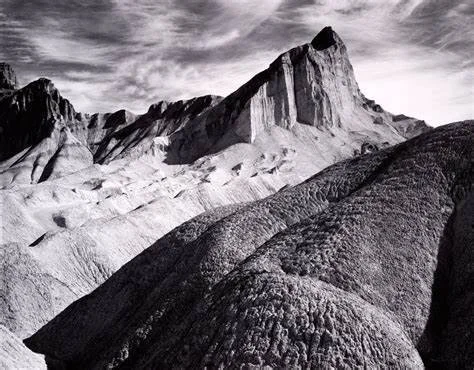
Adams would organize the group's landmark exhibition of what they believed to be the purest form of photography at the M. H. de Young Museum, and authored their manifesto, condemning the tradition of making photographs look like artistic paintings (Barr, 2000). With the group’s formation, Adams began to rise in fame, but not in fortune (Turnage, 2023). Despite working for numerous clients of great financial standing, including IBM, AT&T, and Life Magazine, his financial standing remained poor (Turnage, 2023). However, despite this, he remained busy in his efforts and continued to promote the cause of wilderness and the environment (Turnage, 2023).
While he would go on to continue to develop numerous works, the one that is most often highlighted is his work around World War II. In early 1942, Adams was asked to join an experimental group of military photographers known as the Naval Aviation Photographic Unit by Edward Steichen, a fellow photographer (Alinder, 1996). Adams agreed to join under the circumstance of his rank being established as an officer and he would not be available until July 1st. However, due to Steichen’s want for the unit to be operational by April, he passed on Adams (Alinder, 1996). Following the bombing of Pearl Harbor on December 7th, 1941, a day that will live in infamy, Adams was distraught by how America treated the Japanese Americans who had lived in the United States prior, viewing them as a security risk. Generally, Adams was not known for his direct political stances, however, he made the statement in his photo-essay that was published in an exhibit and later in Born Free and Equal: The Story of Loyal Japanese-Americans. Despite his protestations of the American government, he followed through doing many photographic assignments for the military (Alinder, 1996).
The 1950s marked Adams to slow in his work, although not before starting Aperture Magazine in 1952. He began hosting annual workshops in 1955 until 1981. In 1979, Adams was commissioned to capture the first official photographic portrait of a U.S. president in the 39th President, Jimmy Carter (Alinder, 1996). On April 22nd, 1984, Adams died of a cardiovascular disease at the age of 82, leaving behind his wife, two children, and five grandchildren. His legacy has carried onward in the photography sphere, especially in regards to his activism and conservationism through photography.
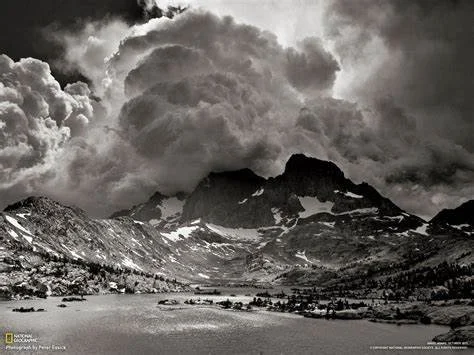
Ansel Adams was truly a pioneer of photography, living a life fully devoted to his career in photography after teaching himself so many other skills. He was a definitive trailblazer in the use of capturing landscapes and the atmosphere of the American West, dedicating his time to the beauty of wilderness conservation. While his history with fortune was peaks and valleys, Adams persevered in his efforts to forge a new path in photography. I hope you have learned something and that you have an excellent week.
All the best,
Logan Clark
Works Cited
Alinder, Mary Street. Ansel Adams: A Biography. Henry Holt and Company, 1996.
“Ansel Adams - Photographs, Yosemite & Facts.” Biography (Bio.), 27 October 2021, https://www.biography.com/artists/ansel-adams. Accessed 3 September 2024.
“Ansel Adams | Smithsonian American Art Museum.” Smithsonian American Art Museum, https://americanart.si.edu/artist/ansel-adams-20. Accessed 3 September 2024.
Barr, Peter. “Ansel Adams, America's Saint George of Conservation.” HCTC, November 2000, https://web.archive.org/web/20080214110746/http://www.hctc.commnet.edu/artmuseum/anseladams/barressay.html. Accessed 3 September 2024.
Szarkowski, John. “Ansel Adams | Biography, Photography, & Facts.” Britannica, https://www.britannica.com/biography/Ansel-Adams-American-photographer. Accessed 3 September 2024.
Turnage, William, and Ansel Adams. “Ansel Adams Biography - A Photographer & Environmentalist.” The Ansel Adams Gallery, 5 July 2023, https://www.anseladams.com/ansel-adams-bio/. Accessed 3 September 2024.