
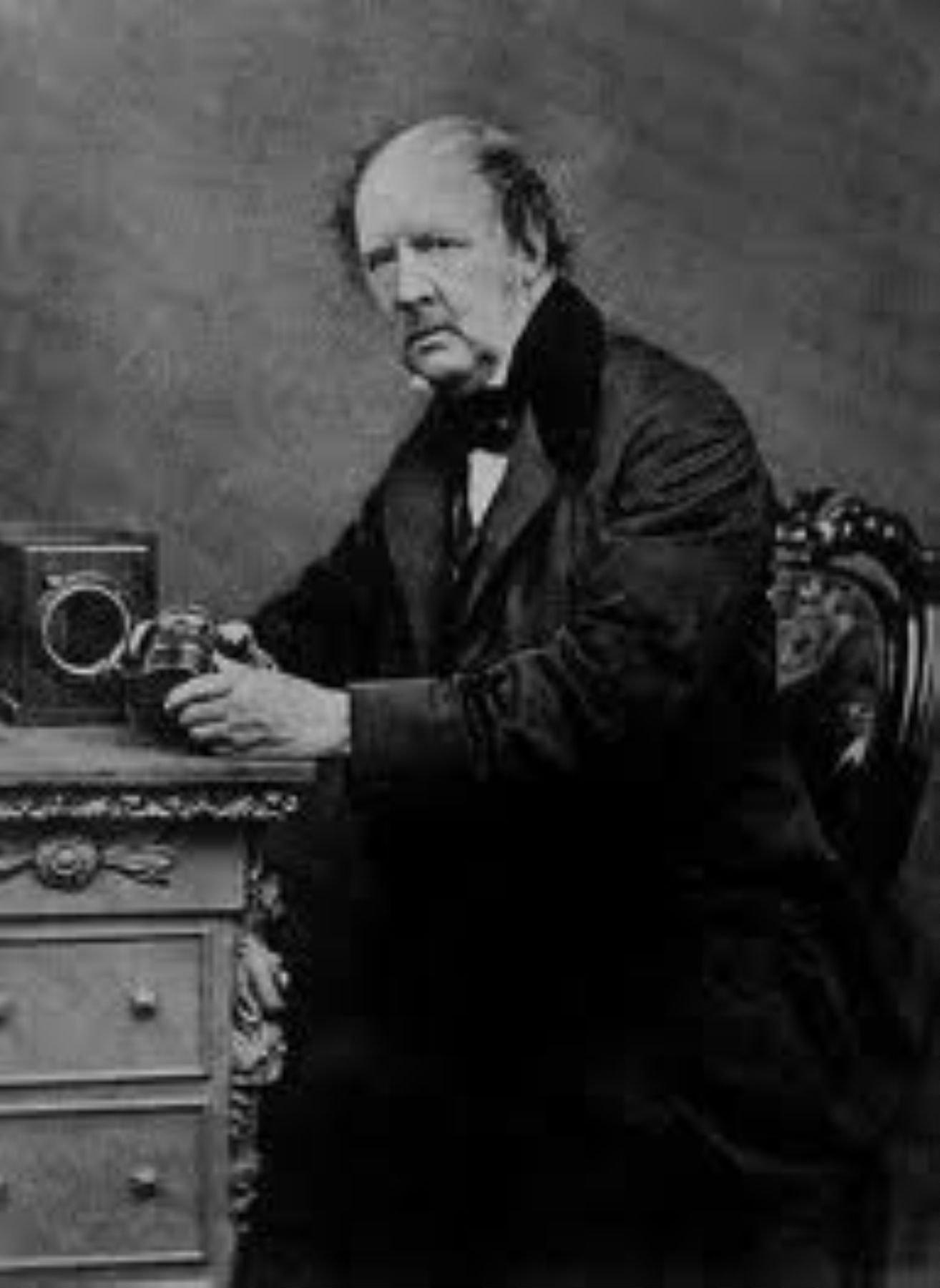
Innovators are very rarely given the credit they deserve. What often happens is the true innovators are rarely given the recognition. One such innovator is the polymath William Henry Fox Talbot, one of the many pioneers of photography. The inventor of numerous things, revolutionary scientist, and innovator of etymology, Talbot is a revolutionary individual.
Born at the turn of the 19th century, William Henry Fox Talbot was born on February 11, 1800 in Dorset, England, the only child of William Davenport Talbot and Lady Elisabeth Fox Strangways. Unfortunately, five months after his birth, his father passed away (Oxford, 2023). Lady Elisabeth Fox Strangways, the daughter of 2nd Earl of Ilchester, was left as a widower until 1804, when she remarried, being wed to Captain Charles Feilding, who eventually achieved the rank of Rear-Admiral (Oxford, 2023). As he was born into relative royalty, Talbot was afforded a great deal of privileges, attending school at three different universities. However, a great opportunity is only such if you take advantage of it, which Talbot notably did. By the young age of 20 years old, he received University of Cambridge’s Porson Prize, an undergraduate award for Greek verse composition and graduated as a wrangler a year later (Library, 2024).
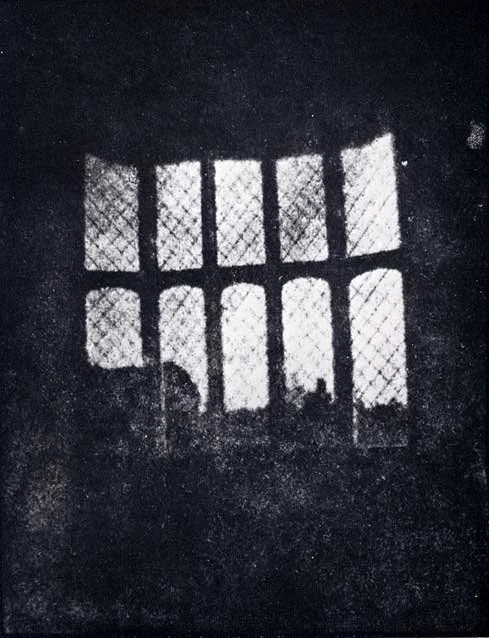
In 1834, Talbot, while serving in Parliament, began a set of experiments, although he would put it on the back burner for sometime (Britannica, 2024). By 1839, once Isidore Niépce and Louis Daguerre presented the daguerreotype in January, Talbot rearranged his priorities and began his experiments once more. Talbot retrieved a paper he wrote in 1835 and presented it to the Royal Institution, which allowed him to begin verified research. According to Oxford University Press (2023), he coated ordinary writing paper with alternate washes of table salt and silver nitrate and embedded a light-sensitive silver chloride in the fibers of the paper, which he then placed in the sun under an opaque object such as a leaf. The result being that the paper would darken where not defended from light, producing a photographic silhouette, which referred to as sciagraphs. Sciagraphs roughly translates to “shadow drawings” in Greek (Oxford, 2023).
By 1840, he had received numerous accolades and had published two books based on his experiments (Oxford, 2023). However, he developed a rivalry against Daguerre through this process. In 1841, he announced the Calotype process, which developed the sciagraphs. Initially, however, he had no interest in patenting the process, which angered many in the scientific community (Britannica, 2024). Eventually, it was patented, which became a revolutionary process, reducing the development from hours to minutes (Blakemore, 2015). Between 1844 and 1846, he published his book in six installments, The Pencil of Nature, which illustrated his findings and documented the original photograph (Oxford, 2023) (Britannica, 2024).
As he continued his experiments, Talbot’s calotype eventually led him to be one of the first investigators of spectral analysis, the study of measures and interprets of electromagnetic spectra. Additionally, Talbot’s studies led to him being elected to the Royal Society in 1831 for his work on the integral calculus, and researched in optics, chemistry, electricity and other subjects such as etymology, the decipherment of cuneiform, and ancient history. With his focus on ancient history, he utilized his knowledge to work in archaeology, leading to his study of Assyriology. The polymath managed to publish six books within the span of eight years. Talbot was also active in the political sphere and the Reformation movement. In 1877, Talbot passed away on September 17th, suffering from heart disease for many years (Oxford, 2023).
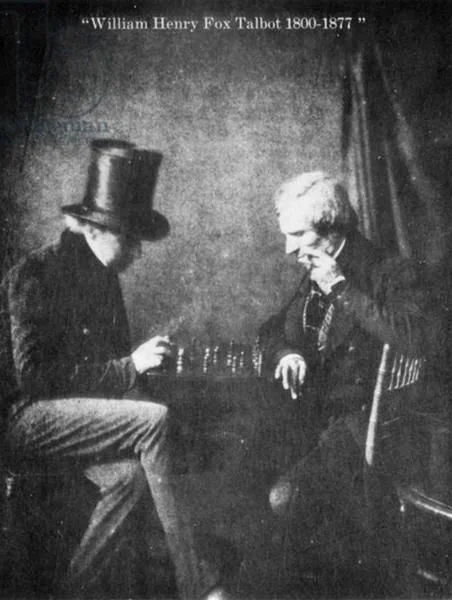
Needless to say, Talbot was one of the most prolific inventors in history. His advances in photography, not to mention all of his scientific discoveries, have led us to where we are today in the industry. The amount of effort he put into creating such a wide array of studies is arguably more effort than most people put into their daily lives. I can honestly say I am astounded with how much he accomplished in his 77 years of life. Truly, he was a man dedicated to his interests and should be remembered for it. I hope that you have learned something and that you have an excellent week!
All the best,
Logan Clark
Works Cited
“Biography.” The William Henry Fox Talbot Catalogue Raisonné, Oxford University Press, 7 November 2023, https://talbot.bodleian.ox.ac.uk/talbot/biography/. Accessed 29 July 2024.
Blakemore, Erin. “Art, Technology, & Early Photography: William Henry Fox Talbot.” JSTOR, 11 September 2015, https://daily.jstor.org/art-technology-early-photography-william-henry-fox-talbot/. Accessed 29 July 2024.
Henry, William. “William Henry Fox Talbot | Biography, Invention, & Facts.” Britannica, https://www.britannica.com/biography/William-Henry-Fox-Talbot. Accessed 29 July 2024.
“Talbot, William Henry Fox.” Cambridge Alumni Library, University of Cambridge, https://venn.lib.cam.ac.uk/cgi-bin/search-2018.pl?sur=&suro=w&fir=&firo=c&cit=&cito=c&c=all&z=all&tex=TLBT817WH&sye=&eye=&col=all&maxcount=50. Accessed 29 July 2024.